
Why Neuropathy PainGets Worse on Certain Days
Everyone has good days and bad days. With neuropathy, a bad day can mean burning, tingling or aching feet that keep you up at night. You are not imagining it: symptoms really can change from one day to the next. Here are five common reasons why, and what you can do about each one.
6 min read
On this page
1. Temperature
Many people with peripheral neuropathy become more sensitive to changes in temperature. Cold makes blood vessels narrow, which reduces blood flow to the hands and feet, and cooler nights can make the nerves more sensitive. Staying in one position for a long time in bed can add pressure on the nerves too.
What can help:
- Keep your bedroom warm and comfortable.
- Add blankets for extra warmth at night.
- Stay out of cold environments when you can.
2. Stress
Stress is a big factor. When you feel very stressed or anxious, pain tends to feel stronger and is harder to manage, and the more you focus on it, the more intense it often feels. Stress alone may not cause peripheral neuropathy, but ongoing stress can lead to physical changes in the body, like inflammation, that may add to the symptoms.
Physical stress counts as well. Strenuous exercise, and the soreness that comes after it, can add to nerve pain during the night.
What can help:
- Learn a relaxation technique you can use during the day and at bedtime.
- When the neuropathy itself is what's stressing you, a book or a movie can take your mind off the discomfort.
- Notice whether hard workouts are followed by worse nights.
3. Blood Flow
Good blood flow keeps nerves healthy, and poor circulation can make neuropathy symptoms worse. You have felt a harmless, temporary version of this when you sit in a certain way and your leg falls asleep: the feeling goes away once you move and circulation returns. More serious circulation problems, though, can lead to severe and permanent nerve damage.
Neuropathy can also affect the nerves that help control your body. Damage to them can cause sudden drops in blood pressure or spikes in heart rate, especially when you stand up, and it can make you sweat too much or too little, which may leave the skin on your feet dry and scaly.
Regular exercise is one of the simplest ways to support your circulation.
4. Sensitivity to Touch and Temperature
Peripheral neuropathy can change how your body perceives everyday sensations. Some people develop allodynia, where things that shouldn't hurt do. That can include:
- A light touch, such as a sheet resting on your feet.
- Heat or cold.
- The normal pressure of sitting or lying down.
On days when this sensitivity is high, simple tasks like getting dressed or walking become harder, and activities you used to enjoy can feel out of reach.
5. Fluid Build-Up
When fluid collects in the lower legs and feet, it raises the pressure on the nerves and increases discomfort. You may notice it most at night: when you lie down, the fluid shifts and can press on the nerves further.
What can help:
- Raise your legs to reduce fluid build-up.
- Ask your provider whether compression stockings suit you. They can improve blood flow and reduce fluid build-up.
- Keep good sleep habits.
Why Neuropathy Often Feels Worse at Night
Several of these reasons stack up at bedtime. Your body temperature drops, you stay in one position for longer, blood flow and fluid shift, and there is nothing left to distract you from the pain. A poor night's sleep then makes the next day harder, and that can turn into a cycle.
Supportive pillows and a relaxation routine before bed can help you sleep better with neuropathy in your feet. Paying attention to your own triggers (a cold room, a stressful week, a long day on your feet) makes the bad days easier to predict and to manage.
Getting Help for Neuropathy
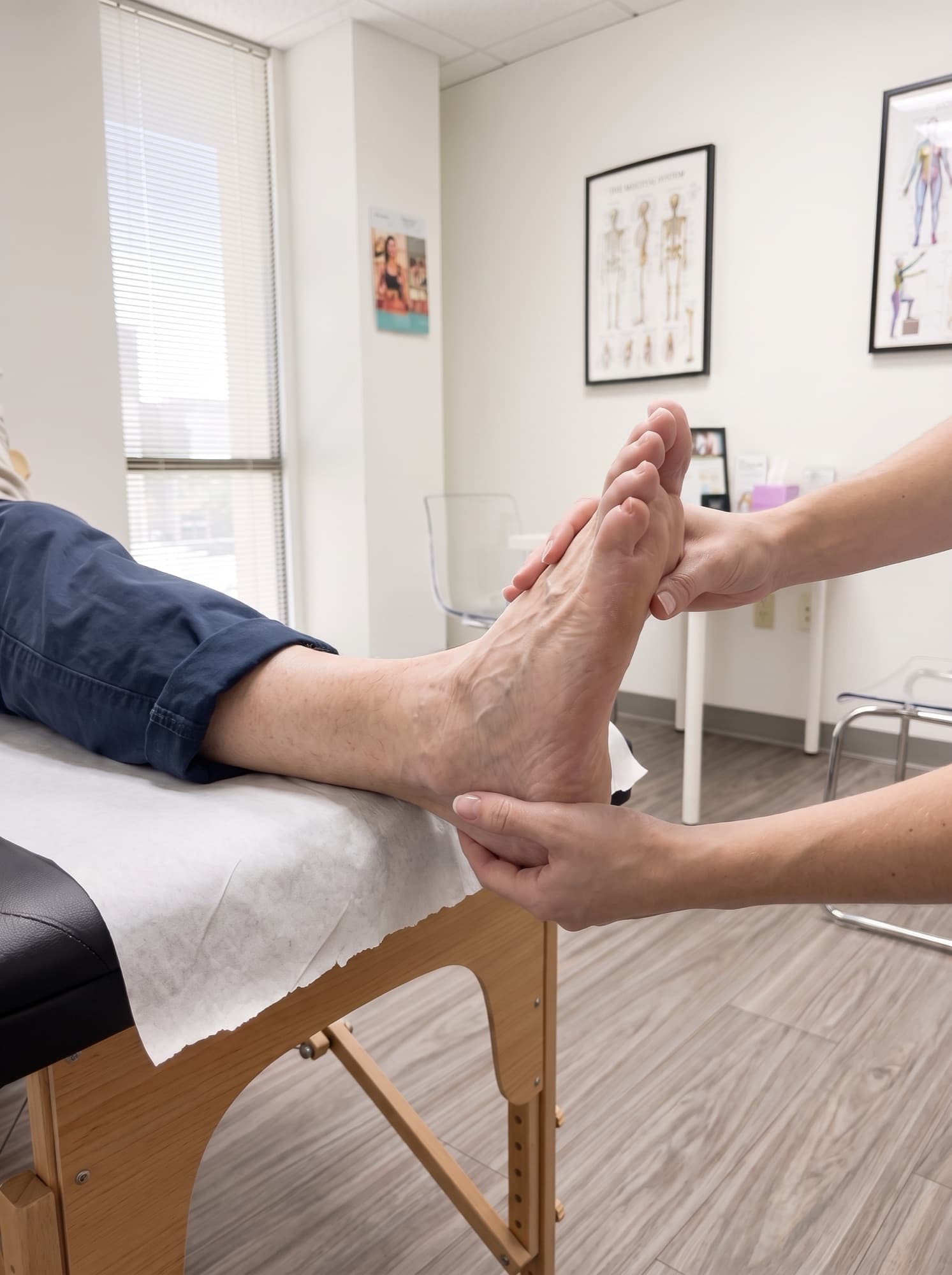
Day-to-day changes are common, but numbness, tingling or burning that keeps coming back deserves a proper look. At Water's Edge Medical Clinic, a first visit includes a thorough history and an evaluation with orthopedic and neurologic testing (including sensation and motor control) and a thermal scan of the feet and hands.
We treat neuropathy without operations or addictive medications, using treatments such as SoftWave and plasma therapy, chosen for each patient after that evaluation.
Frequently Asked Questions
Temperature changes affect blood flow and nerve sensitivity. Cold makes blood vessels narrow and reduces blood flow to the hands and feet, which can bring on more pain and discomfort.
Talk With Us About Your Neuropathy
If tingling, burning or numbness is changing how you sleep, walk or get through your day, an evaluation is a good next step. At Water's Edge Medical Clinic in St. Petersburg, we check how severe your symptoms are and go over the treatment options that fit you.